
English


Views: 0 Author: Site Editor Publish Time: 2026-10-15 Origin: Site


Standard mechanical filtration systems like HEPA fall short when dealing with chemical pollutants. They effectively trap airborne particles but allow gaseous pollutants, Volatile Organic Compounds (VOCs), and complex odors to pass right through. Gaseous contaminants require specialized gas-phase air purification to neutralize threats at the molecular level.
Inadequate gas removal creates severe operational and health risks. Poor indoor air quality triggers asthma and other severe respiratory issues. It leads to regulatory non-compliance and drives up occupant health complaints. Consumer-grade solutions routinely fail in high-demand commercial or industrial environments. You need industrial-grade interventions to maintain safe air quality.
Managing airborne gases relies on two primary methodologies: physical adsorption and chemical destruction. The choice between activated carbon vs photocatalytic filters dictates maintenance schedules, energy consumption, and secondary pollution risks. Understanding how each technology operates is mandatory for designing effective HVAC filtration systems.
Mechanism Difference: Activated carbon physically traps gases through porous adsorption, while photocatalytic filters attempt to chemically break down VOCs using UV light and a catalyst.
Performance Limits: Carbon filters have a finite capacity and require media replacement upon saturation; photocatalytic systems do not saturate but are limited by reaction time (dwell time) and airflow velocity.
Byproduct Risks: Photocatalytic oxidation carries a documented risk of incomplete oxidation, potentially releasing harmful byproducts like formaldehyde or ozone, requiring strict evaluation of manufacturer safety data.
Application Fit: Heavy, continuous VOC loads typically favor deep-bed activated carbon (or treated carbon), while environments requiring pathogen control alongside light VOC mitigation may consider photocatalytic systems.

Activated carbon filters and photocatalytic filters use different methods to reduce gaseous pollutants. Activated carbon captures contaminants through adsorption, while photocatalytic oxidation (PCO) uses light-activated catalysts to chemically transform certain pollutants.
Understanding these differences helps manufacturers and facility managers choose suitable filters for HVAC and industrial air purification systems.
Activated carbon contains a network of microscopic pores that adsorb gaseous contaminants onto its internal surfaces. Its effectiveness depends on pore structure, contaminant characteristics, contact time, temperature, and humidity.
Activated carbon is commonly used to reduce VOCs and odors in commercial HVAC and industrial ventilation systems.
Some gases, including formaldehyde and ammonia, may require specially treated or impregnated carbon for effective removal.
For applications involving VOCs and odors, explore our Honeycomb Activated Carbon Filters.
Photocatalytic filters use a light-activated catalyst, commonly titanium dioxide (TiO₂), to promote chemical reactions that break down certain gaseous contaminants.
When illuminated by a suitable light source, the catalyst generates reactive species that can oxidize VOC molecules.
Unlike activated carbon, PCO systems are designed to transform pollutants rather than simply store them. However, incomplete oxidation may produce intermediate compounds, so actual removal performance and byproduct emissions must be verified.
Explore our Photocatalytic Filters for HVAC and air purification applications.
Comparison | Activated Carbon | Photocatalytic Filters |
|---|---|---|
Treatment Method | Physical adsorption | Photocatalytic oxidation |
Main Function | Captures gaseous pollutants | Chemically transforms certain pollutants |
Key Component | Porous activated carbon | Catalyst and suitable light source |
Performance Factors | Carbon capacity, contact time, humidity | Catalyst activity, light intensity, airflow |
Main Limitation | Finite adsorption capacity | Incomplete oxidation and possible byproducts |
VOC removal performance depends on the pollutant type, airflow, treatment capacity, and operating environment. Neither technology is universally superior.
Activated carbon filters are widely used for removing suitable VOCs and odors through adsorption. Performance depends on carbon properties, bed depth, and contact time.
Photocatalytic filters may reduce selected gaseous pollutants through oxidation, but effectiveness varies with catalyst design, light intensity, and airflow velocity.
For either technology, manufacturers should evaluate performance against the specific target contaminants rather than relying on general removal claims.
Activated carbon gradually loses adsorption capacity as contaminants occupy available adsorption sites. Exhausted media must be replaced or regenerated using an appropriate process.
Photocatalytic filters do not become saturated in the same way, but their performance may decline due to catalyst fouling, reduced light output, or component deterioration.
Both technologies require suitable maintenance and performance monitoring.
Photocatalytic oxidation systems may generate intermediate compounds, such as formaldehyde or acetaldehyde, when VOC oxidation is incomplete. Certain UV lamp designs may also produce ozone.
For occupied buildings, buyers should verify pollutant removal efficiency and secondary emissions using relevant test data.
Activated carbon filtration generally captures pollutants without intentionally converting them into other chemicals. However, desorption, breakthrough, or unsuitable media selection may affect outlet air quality.
Proper product selection and maintenance are essential for both filtration technologies.
Evaluation Factor | Activated Carbon Filters | Photocatalytic Filters |
|---|---|---|
VOC Treatment | Adsorption of suitable pollutants | Oxidation of selected pollutants |
Odor Removal | Effective for many adsorbable odor compounds | Depends on pollutant and catalyst |
Capacity Limitation | Media eventually becomes exhausted | Catalyst activity and light availability |
Humidity Effects | May reduce adsorption of some VOCs | Can influence photocatalytic reactions |
Byproduct Concerns | Breakthrough or desorption | Possible partial oxidation products |
Maintenance | Carbon replacement and inspection | Catalyst cleaning and light-source maintenance |
Main Selection Priority | Adsorption capacity and contact time | Verified conversion efficiency and emissions |
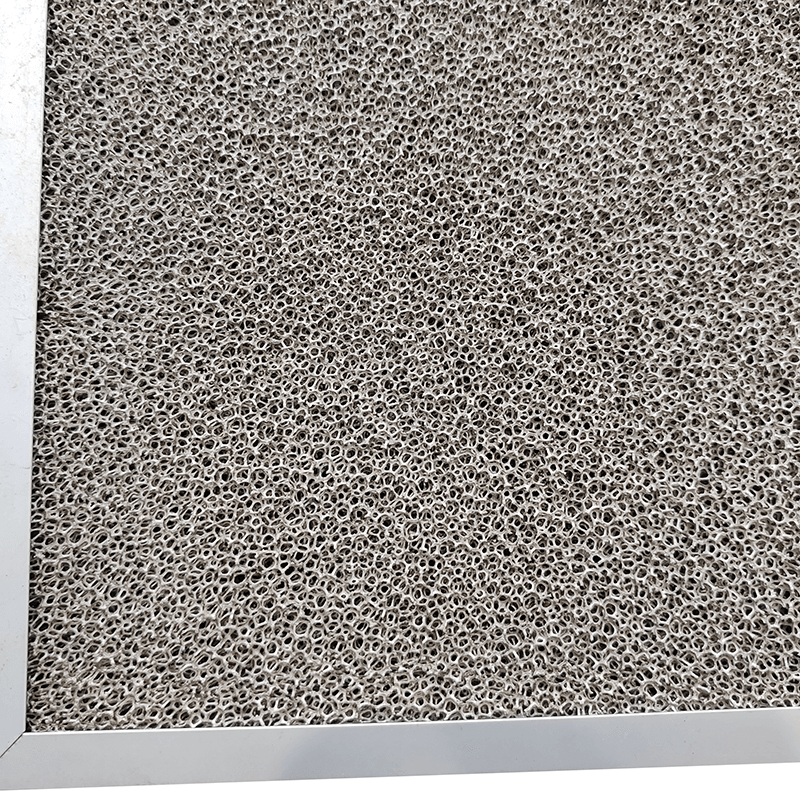
Activated carbon filters and photocatalytic oxidation (PCO) filters require different installation and maintenance approaches. Activated carbon captures suitable gaseous pollutants through adsorption, while PCO systems use light-activated catalysts to break down certain contaminants.
Maintenance requirements depend on filter design, pollutant levels, operating conditions, and equipment specifications.
Activated carbon filter maintenance mainly involves checking adsorption performance, airflow resistance, and media condition.
Carbon filters do not provide a reliable visual indication of saturation. Replacement should therefore be based on operating conditions, manufacturer guidance, and contaminant monitoring when appropriate.
Key maintenance steps include:
Monitor upstream and downstream VOC concentrations when suitable measurement methods are available.
Check airflow and pressure drop regularly.
Inspect filter housings for leaks or bypass.
Replace exhausted carbon media according to validated performance criteria.
Handle and dispose of used carbon according to the contaminants it has captured.
For HVAC applications, explore our Custom VOCs Removal Activated Carbon Honeycomb Filter, which supports customized dimensions and filter configurations.
Photocatalytic filter maintenance focuses on catalyst cleanliness, light-source performance, and airflow conditions.
For UV-activated TiO₂ systems, reduced light output or contaminated catalyst surfaces can affect treatment efficiency.
Recommended maintenance includes:
Inspect upstream particulate filters.
Check UV lamp operation and accumulated operating hours, where applicable.
Clean catalyst surfaces according to manufacturer instructions.
Replace light sources according to their specified service life.
Verify pollutant removal performance and check for undesirable byproducts where relevant.
Some photocatalytic systems use different light sources or operating configurations, so maintenance requirements should follow the equipment design.
Explore our Ceramic Photocatalyst Filter for HVAC Systems for HVAC air purification applications.
Evaluation Factor | Activated Carbon Filters | Photocatalytic Filters |
|---|---|---|
Treatment Method | Adsorption | Light-activated catalytic reaction |
Main Maintenance | Carbon replacement and performance checks | Catalyst cleaning and light-source maintenance |
Performance Monitoring | VOC breakthrough and pressure drop | Pollutant removal and light-source condition |
Main Operating Concern | Adsorbent saturation | Insufficient reaction or unwanted byproducts |
Replacement Needs | Depends on adsorption capacity and loading | Depends on catalyst and equipment condition |
HVAC filter selection should account for airflow, pressure drop, pollutant concentration, and available installation space.
Activated carbon filter pressure drop depends on media structure, bed depth, and airflow velocity.
Dense carbon beds may require greater fan capacity, while honeycomb activated carbon filters can offer lower airflow resistance in suitable configurations.
Photocatalytic filters may also use low-resistance substrates, but complete PCO systems can require additional electrical power for UV lamps or other components.
Engineers should compare total system energy consumption rather than filter resistance alone.
Proper sizing ensures sufficient contact between the air stream and the treatment media.
For activated carbon, important factors include carbon capacity, contaminant concentration, airflow, and contact time.
For PCO systems, performance depends on catalyst surface area, light intensity, residence time, and pollutant chemistry.
In variable air volume (VAV) systems, filtration performance should be evaluated across the expected operating airflow range.
Neither technology should be sized using airflow alone. Actual removal efficiency and potential byproduct formation should be considered during system design.
Choosing between activated carbon and photocatalytic filters depends on the target pollutants, required air quality, available space, and maintenance capabilities.
Activated carbon filters are suitable when the main objective is adsorption of VOCs, odors, and selected gaseous contaminants.
Common applications include:
Commercial HVAC systems requiring odor control.
Offices and public buildings with gaseous pollutant concerns.
Industrial exhaust treatment for suitable VOCs.
Facilities requiring adsorption-based air purification.
Explore our Honeycomb Activated Carbon Filters for HVAC and industrial air treatment applications.
Photocatalytic filters may be considered for applications requiring catalytic treatment of selected gaseous pollutants.
Potential applications include commercial ventilation, office air purification, and compatible industrial air treatment systems.
However, actual performance depends on the catalyst, light source, airflow, and contaminant type.
Where PCO is used for occupied indoor spaces, evaluate both pollutant removal and potential secondary emissions before installation.
Hybrid air purification systems combine different treatment technologies to address a wider range of contaminants.
For example, a system may use photocatalytic treatment alongside activated carbon adsorption to target VOCs and odors.
In some designs, activated carbon installed downstream of PCO may help adsorb certain residual pollutants or reaction byproducts. However, this arrangement must be tested rather than assumed to eliminate all emissions.
Selection Factor | Activated Carbon | Photocatalytic Filter |
|---|---|---|
Primary Function | Adsorbs suitable gases and odors | Catalytically transforms certain pollutants |
Suitable Applications | VOC and odor adsorption | Selected gas treatment applications |
Airflow Requirements | Depends on carbon configuration | Depends on catalyst and reactor geometry |
Operating Energy | Mainly fan energy | Fan energy plus light-source energy, if required |
Maintenance | Replace exhausted media | Clean catalyst and maintain light source |
Main Limitation | Finite adsorption capacity | Variable conversion efficiency and possible byproducts |
Key Verification | Breakthrough and adsorption performance | Removal efficiency and secondary emissions |
Activated carbon remains the industry standard for reliable, verifiable gas and odor removal. Its physical adsorption process guarantees predictable results without the risk of secondary chemical byproducts. Photocatalytic filters offer a niche solution for biological control and light VOCs, but they require careful engineering to avoid incomplete oxidation. Selecting the right technology depends entirely on your specific airflow dynamics and pollutant load.
Audit your specific VOC load before finalizing a system design. Evaluate your HVAC system's static pressure limits to ensure it can handle deep-bed media. Always review independent safety certifications, such as CARB compliance for zero ozone emissions, before installing any chemical destruction technology.
Conduct a baseline indoor air quality (IAQ) test using a PID meter to identify your exact VOC and odor profile.
Consult with an HVAC engineer to calculate your system's available static pressure and size the filter housings appropriately.
Request third-party efficacy and safety data from manufacturers to verify zero ozone production.
Implement a strict maintenance schedule based on downstream PID meter readings rather than arbitrary timelines.
A: Some PCO systems can produce ozone depending on the UV wavelength used. While safe UV-C (254 nm) does not generate ozone, the primary risk of PCO is incomplete oxidation. This process can convert harmless VOCs into secondary pollutants like formaldehyde if the air moves too quickly across the catalyst.
A: The lifespan depends entirely on carbon weight, VOC concentration, humidity, and continuous versus intermittent use. A heavy commercial bed might last a year, while a thin carbon pad may saturate in weeks. You must use a PID meter to test downstream air to determine exact saturation points.
A: No. HEPA filters only capture solid particulate matter like dust, pollen, and smoke particles. They cannot remove gases, VOCs, or provide relief from chemical pollutants. You must use gas-phase filtration like activated carbon to capture odors.
A: Treated carbon undergoes chemisorption. Manufacturers impregnate the carbon with chemicals like potassium permanganate. This targets specific, difficult-to-remove gases that standard carbon misses, such as formaldehyde, ammonia, and hydrogen sulfide, by chemically neutralizing them upon contact.
A: They are safe only if properly engineered. You must ensure adequate dwell time to prevent incomplete oxidation. Always look for CARB (California Air Resources Board) certification, which verifies the device does not emit dangerous levels of ozone into the indoor environment.
A: A sour smell indicates desorption. The carbon is fully saturated and is now releasing trapped microbial VOCs (mVOCs) back into the air due to temperature or humidity changes. This smell is a definitive signal that you must replace the carbon media immediately.


