
English


Views: 0 Author: Site Editor Publish Time: 2026-10-15 Origin: Site


The core filtration technology you select during the research and development phase dictates your air purifier’s entire product lifecycle. It drives Bill of Materials (BOM) structures, acoustic performance, smart sensor integration, and regulatory compliance. When product teams architect a new purification system, they must balance the market demand for high Clean Air Delivery Rates (CADR) and silent operation against the physical realities of airflow resistance, ongoing consumer maintenance, and strict ozone emission standards.
Selecting the wrong filtration mechanism leads to bloated manufacturing costs, failed regulatory certifications, or poor consumer reviews due to excessive noise. Evaluating electrostatic vs HEPA filters requires looking beyond basic particulate capture rates. You must analyze pressure drop, long-term efficiency degradation, environmental sustainability, and the strategic choice between recurring revenue models and low-maintenance consumer positioning.
Filtration Consistency: HEPA filters maintain or increase particulate capture efficiency as they load, whereas electrostatic filters experience a significant drop in efficiency as collection plates become coated.
Engineering Constraints: Electrostatic filters offer near-zero pressure drop, allowing for smaller, quieter motors, while HEPA requires high-static-pressure fans that complicate acoustic engineering.
Regulatory Risks: Electrostatic technologies carry inherent risks of ozone generation, requiring rigorous testing to meet California Air Resources Board (CARB) and international safety standards.
Revenue Models: HEPA systems support a recurring "razor-and-blades" revenue model through filter replacements, while electrostatic systems typically rely entirely on the initial hardware margin.
Sustainability Positioning: Washable electrostatic systems appeal to eco-conscious demographics by reducing landfill waste, whereas traditional HEPA media introduces recurring non-recyclable waste.
HEPA filters and electrostatic filters use different mechanisms to capture airborne particles, including PM2.5, PM1.0, and ultrafine particles.
HEPA filters rely on fibrous media to trap particles, while active electrostatic filters use electrical forces to charge and collect them. These differences affect filtration efficiency, airflow resistance, equipment design, and maintenance requirements.
High-Efficiency Particulate Air (HEPA) filters use densely arranged fibers to capture airborne particles through three main mechanisms:
Inertial Impaction: Larger particles cannot follow airflow around fibers and collide with the filter media.
Interception: Particles following the airflow contact nearby fibers and become trapped.
Diffusion: Ultrafine particles move irregularly due to Brownian motion, increasing their likelihood of contacting fibers.
HEPA classification depends on the applicable testing standard. For example, the U.S. DOE definition specifies at least 99.97% efficiency for 0.3 μm particles, while EN 1822 evaluates HEPA performance at the most penetrating particle size (MPPS).
Proper filter sealing is also essential to prevent untreated air from bypassing the media.

Electrostatic precipitators use electrical forces to remove airborne particles. In a typical active system, particles pass through a charging section and are then attracted to collection surfaces.
The process generally includes three stages:
Particle Charging: An electrical field gives airborne particles an electrical charge.
Electrostatic Collection: Charged particles move toward collection surfaces under electrical forces.
Particle Retention: Particles remain on the collection surfaces until the filter is cleaned.
Unlike active electrostatic precipitators, passive electret filters use electrically charged fibers and do not require a continuous external high-voltage supply.
Explore our for HVAC and air purification applications.
Comparison Factor | HEPA Filters | Active Electrostatic Filters |
|---|---|---|
Capture Principle | Mechanical particle capture | Electrical charging and collection |
Main Components | Fibrous filtration media | Charging and collection sections |
Fine Particle Removal | Depends on certified filter performance | Depends on collection efficiency and operating conditions |
Power Requirements | No electricity required by the filter media | Electrical power required for active collection |
Airflow Resistance | Depends on media and dust loading | Often relatively low |
Maintenance | Periodic filter replacement | Cleaning or servicing collection components |
Key Consideration | Filtration efficiency and air bypass | Collection efficiency and electrical safety |
A critical engineering reality is that neither HEPA nor electrostatic precipitation captures gaseous pollutants, Volatile Organic Compounds (VOCs), or odors. Both technologies are strictly designed for solid and liquid particulate matter. To address chemical pollutants, you must integrate an activated carbon stage or chemisorption media. Adding a dense carbon bed significantly increases the overall system pressure drop. You must factor this additional resistance into the fan motor specifications regardless of which primary particulate technology you choose.
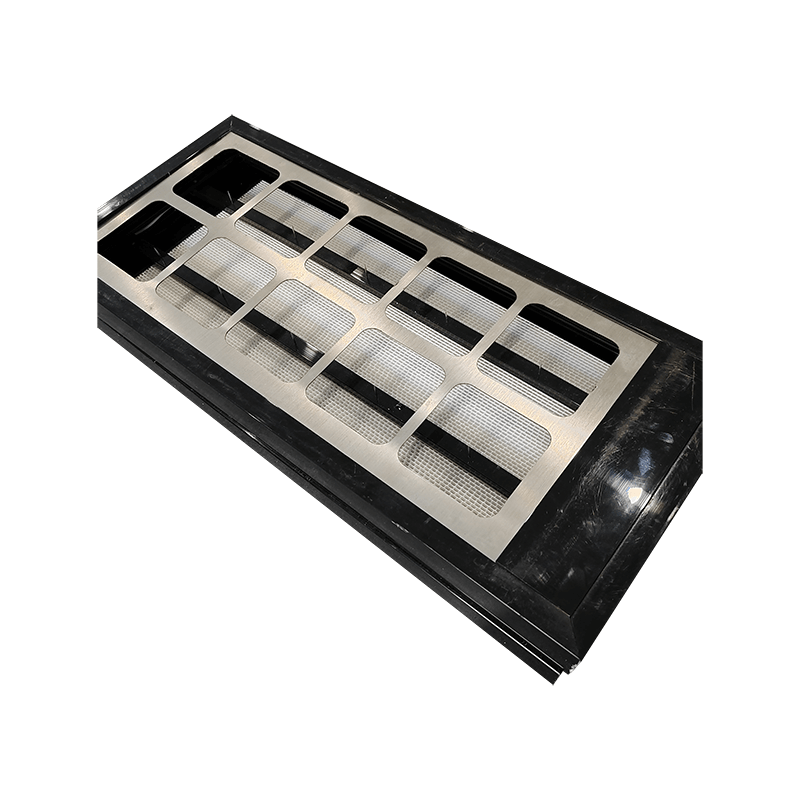
HEPA filters and electrostatic filters use different particle capture mechanisms, affecting airflow resistance, filtration efficiency, energy consumption, and maintenance requirements.
The best solution depends on the required clean air delivery rate (CADR), installation conditions, and long-term operating costs.
HEPA filters capture particles through dense fibrous media. Their pressure drop depends on filter design, media area, airflow, and dust loading.
Electrostatic filters use electric fields to capture airborne particles. Many designs offer relatively low airflow resistance, making them suitable for HVAC systems requiring high airflow.
However, lower filter resistance does not automatically guarantee lower total energy consumption.
HEPA filtration performance may change as particles accumulate. Dust loading generally increases pressure drop, potentially reducing airflow if the fan cannot compensate.
Electrostatic filters may also experience reduced collection efficiency when their surfaces become contaminated.
Both technologies require maintenance to maintain effective particle removal.
Clean Air Delivery Rate (CADR) measures the volume of cleaned air delivered by an air purifier under specified test conditions.
A higher CADR indicates faster particle removal under those conditions, but it does not independently establish long-term performance.
Buyers should compare CADR, particle removal efficiency, noise, and maintenance requirements when evaluating products.
Engineering Factor | HEPA Filters | Electrostatic Filters |
|---|---|---|
Filtration Method | Fiber-based particle capture | Electrically assisted particle capture |
Pressure Drop | Depends on filter design and loading | Often relatively low |
Dust Loading | May increase airflow resistance | May reduce collection efficiency |
Energy Consumption | Primarily fan operation | Fan plus electrical collection system |
Noise | Depends on fan and housing design | Depends on fan and electrical system |
Ozone Considerations | Passive media does not generate ozone | Requires verification for active systems |
Maintenance | Filter replacement | Cleaning or replacement, depending on design |
For HVAC applications, explore our , which is designed for washable operation and low airflow resistance.
Air purifier manufacturing costs depend on filter technology, component design, production volume, and maintenance requirements.
HEPA systems typically require filtration media, filter frames, sealing components, and suitable fans.
Electrostatic systems may require charging components, collection modules, high-voltage electronics, and electrical safety protection.
Manufacturers should compare total component costs, assembly requirements, and product reliability.
Smart air purifiers may use sensors to monitor filter condition and maintenance needs.
HEPA systems can use operating hours, airflow, or pressure-drop monitoring to estimate replacement requirements.
Electrostatic systems may use operating hours, electrical fault monitoring, or other indicators to support cleaning schedules.
HEPA systems often generate recurring demand for replacement filters.
Washable electrostatic systems can reduce consumable replacement requirements, although cleaning, component servicing, and eventual replacement may still be necessary.
The best business model depends on the product's intended market and lifecycle costs.
Air purifier safety and compliance should be considered during product design, particularly for electrically powered filtration technologies.
Some electrostatic air cleaners can generate ozone during electrical discharge.
Manufacturers should verify ozone emissions through applicable testing rather than assuming that every electrostatic filter produces harmful levels.
For products sold in California, the California Air Resources Board (CARB) electronic air cleaner requirements may apply, including the relevant ozone emission limit and certification procedures.
Designers should also evaluate electrical insulation, component safety, and applicable market requirements.
Air filter maintenance affects filtration performance, operating costs, and user satisfaction.
HEPA filters generally require periodic replacement because accumulated particles increase resistance and may affect airflow.
Washable electrostatic filters require cleaning according to the manufacturer's instructions.
Users should switch off the equipment, follow the required electrical safety procedures, and allow washable collection modules to dry completely before reinstallation.
For washable HVAC solutions, explore our BESIN Washable Micro Electrostatic Filter.
HEPA filters generate periodic consumable waste, while reusable electrostatic collection modules may reduce filter disposal.
However, sustainability also depends on electricity consumption, cleaning requirements, material durability, and equipment lifespan.
Manufacturers should evaluate the complete product lifecycle rather than considering filter replacement alone.
Hybrid air filtration systems combine different capture methods to balance particle removal efficiency, airflow resistance, and operating costs.
Two common approaches include:
Electret filter media use fibers with an embedded electrical charge to improve particle capture.
This technology can provide high filtration efficiency with relatively low pressure drop in suitable designs.
However, performance depends on the media structure, charge stability, and operating conditions. Electret media still require replacement when exhausted or damaged.
Pre-ionization systems charge airborne particles before they pass through a downstream collection or mechanical filtration stage.
The added electrical charge may improve particle capture in suitable configurations.
However, system efficiency, ozone emissions, electrical safety, and maintenance requirements must be verified through testing.
Filter Type | Main Advantage | Main Consideration |
|---|---|---|
HEPA | Established fine-particle filtration | Pressure drop and replacement needs |
Electrostatic | Washable designs and potentially low resistance | Cleaning and electrical safety |
Electret Media | High-efficiency particle capture with suitable airflow characteristics | Charge stability and replacement |
Hybrid Filtration | Combines multiple capture mechanisms | Higher design complexity and validation needs |
There is no universal superior choice in the engineering of air purification systems. The decision hinges entirely on your target market, acoustic targets, sustainability goals, and desired revenue model. Aligning the physical capabilities of the technology with your business objectives is the key to a successful product launch.
Conduct parallel CADR and acoustic chamber testing using prototype fan curves for both technologies early in the R&D phase to establish accurate baseline metrics.
Evaluate CARB compliance and ozone mitigation strategies immediately if pursuing any form of high-voltage ionization to prevent late-stage regulatory failures.
Map out the intended revenue model to determine if consumable filter sales align with your long-term business strategy or if a premium hardware margin is preferred.
Specify motor and fan assemblies only after finalizing the primary filtration media to avoid underpowering the system or creating excessive acoustic resonance.
A: HEPA uses a dense matrix of fibers to mechanically trap particles, resulting in high pressure drop but consistent efficiency. Electrostatic filters use high voltage to charge particles and trap them on metal plates, offering low pressure drop but requiring frequent washing to maintain efficiency.
A: Yes. The high-voltage ionization process used to charge particles inherently splits oxygen molecules, creating ozone as a byproduct. You must carefully engineer these systems and often use catalysts to ensure emissions remain below strict regulatory limits like CARB.
A: The dense fiberglass or synthetic media required to capture 99.97% of ultrafine particles creates significant airflow resistance. To push air through this barrier, purifiers require high-torque motors operating at higher RPMs, which generates more mechanical and aerodynamic noise.
A: Yes. As dust and particles accumulate on the metal collection plates, they form an insulating layer. This layer weakens the electric field, drastically reducing the system's ability to attract and capture new particles until the plates are thoroughly washed.
A: Yes. Hybrid models frequently use a pre-ionizer to charge incoming particles before they reach a mechanical filter. This increases the capture rate, allowing engineers to use less dense media, which lowers pressure drop and reduces noise while maintaining high efficiency.
A: HEPA is superior for recurring revenue. Because the physical media becomes permanently clogged with particulate matter, consumers are forced to purchase proprietary replacement filters every six to twelve months, creating a continuous post-sale revenue stream.


